October 18, 2026
Gutter Repair in Wildwood FL: Common Signs a System Is Starting to Fail
By @roofedgejournal555
A gutter system usually goes unnoticed until it stops doing its job. In Wildwood, that moment often shows up fast. A stretch of hard summer rain, a storm band rolling through, or a roof full of pine needles can turn a small maintenance issue into water spilling where it should not. By the time a homeowner sees overflow at the edge of the roofline, the trouble often started weeks or months earlier.
That is why gutter repair Wildwood FL calls tend to follow a familiar pattern. Someone notices water pouring over one corner during a storm. Another homeowner sees damp soil collecting too close to the house. Another spots debris packed tight in a valley above the front entry and wonders whether the gutter is too small, too clogged, or simply worn out. In this part of Florida, all three can be true.

Central and North Florida homes deal with intense rainy seasons, heavy humidity, and tropical weather that can stress even a decent gutter system. University guidance for Florida storm prep specifically recommends clearing needles, leaves, and other debris from roofs and gutters because those blockages build up before storms and get worse when runoff ramps up. That advice lines up with what contractors see in the field every season. Gutters rarely fail all at once. They usually give clues first.
Why gutters fail earlier in Florida than homeowners expect
Florida weather asks a lot from gutters. During long dry stretches, debris settles in the troughs and around downspout openings. Then summer rains arrive and all that loose material turns into a dense, wet mat. Pine needles weave together. Oak leaves pack down. Small twigs catch at seams or corners. Once that happens, water does not move cleanly toward the outlets.
There is another Florida-specific wrinkle. Yard debris and leaf litter do not just create clogs, they can also contribute to stormwater pollution if runoff carries them away. UF/IFAS has documented that live oak leaves and acorns are a source of nutrient pollution in Florida stormwater. So when a gutter is overflowing and washing debris off the roof edge or into drainage paths, it is not only a house maintenance issue. It can also become a broader runoff problem.
Humidity adds its own strain. Wet organic buildup lingers longer, especially in shaded spots. Gutters and downspouts that stay damp tend to hold debris more stubbornly, and maintenance gets delayed because the system appears to be draining "well enough" between storms. Then a heavier event exposes the weak point.
This is one reason gutter cleaning Fruitland Park FL, seamless gutters Ocala FL, and gutter replacement Gainesville FL conversations often sound surprisingly similar. The communities differ, but the weather pattern and debris load are close enough that the warning signs repeat across the region.
The earliest warning sign is usually overflow, not a hole
Most homeowners expect failure to look like obvious physical damage. Sometimes it does. More often, the first sign is performance. Water should enter the gutter, move to the downspout, and discharge away from the house in a controlled way. When that process breaks down, the symptoms start showing up in motion.
If you see water sheeting over the front lip during an ordinary rain, not just a once-a-year downpour, something is off. It may be a blockage. It may be poor slope. It may be a capacity issue. It may even be a combination of all three. In Wildwood and nearby areas, intense rain can reveal whether the existing setup is actually sized and routed for local conditions.
That is where questions about gutter sizes for Florida homes come in. Bigger is not automatically better, and smaller is not always wrong, but a system has to match the roof area and the drainage demand it sees. Florida building requirements state that gutters and downspouts must be sized and discharged in accordance with the building and plumbing code. A system that is undersized for the roof it serves may struggle even when it is relatively clean.
A homeowner standing in the yard usually cannot diagnose sizing by sight alone, but they can notice the pattern. If overflow happens repeatedly in the same stretch and the gutter is not packed with debris, capacity or discharge design deserves a closer look.
Debris buildup tells a story before water damage does
In this region, debris is rarely random. Certain rooflines collect more than others. Homes near pines often build up long mats of needles that bridge across the trough and trap everything else behind them. Oaks add broad leaves and acorns that can gather in valleys, corners, and downspout openings. UF/IFAS materials specifically mention using fallen leaves and pine needles on site as mulch rather than letting them wash away, which says a lot about how much of this material Florida properties can generate.
When I hear someone ask whether they really need gutter guards for pine needles Florida homes deal with year after year, my first response is usually that guards are not a magic fix. Pine needles are stubborn. Some guard styles reduce large debris entry, but fine material can still accumulate on top, around openings, or in transitions. The better question is whether the current system is easy to maintain and whether debris is collecting in predictable trouble spots.
A failing system often shows one or more of these signs:
- water spilling over the edge during routine rain
- downspouts that trickle weakly or back up at the top
- visible mats of pine needles, leaves, or acorns in the trough
- sections that hold standing water after the rain stops
- repeated debris washout around the same corners or discharge points
None of those signs automatically means full replacement. They do mean the system needs attention before the next heavy weather cycle.
Standing water is a quiet sign that slope or support has changed
A healthy gutter should not keep puddles for long after rainfall ends. If water sits in one section, the run may have lost slope, the hangers may be loosening, or a blockage may be slowing discharge. Homeowners often miss this because they only look up when it is actively raining. A dry-day inspection can tell you more.
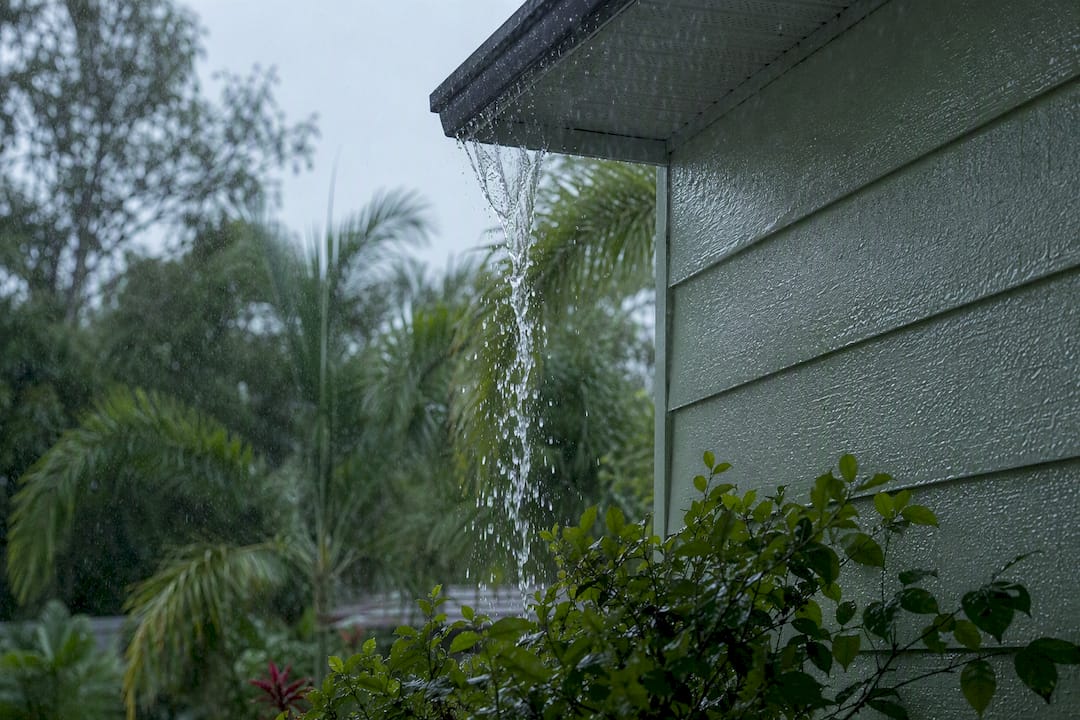
Standing water matters because it keeps organic buildup wet. That accelerates the sticky, compacted mess that turns simple cleaning into a tougher job. UF/IFAS maintenance guidance for stormwater infrastructure recommends cleaning gutters and downspouts as needed and removing organic buildup, especially in summer. That timing makes sense. Summer is when both plant debris and rain volume can combine to expose every weakness in the system.
This is also where material quality and fastening matter. Florida code materials state that exterior gutters and leaders should be made of metal or approved plastic and securely fastened with corrosion-resistant fasteners. If supports are failing or fasteners are no longer holding properly, sections can sag just enough to trap water. The change may look minor from the ground, but even a slight dip alters flow.
Many homeowners in this area prefer aluminum gutters Central Florida contractors commonly install because metal systems can be formed and fastened in durable ways. Still, no material escapes the need for cleaning, inspection, and proper support over time.
Downspouts often create the real bottleneck
People talk about gutters as one piece, but many drainage failures begin or end at the downspout. A gutter trough can be relatively clean and still perform poorly if water cannot exit fast enough. Debris tends to collect where the horizontal run meets the outlet, and once that opening narrows, the whole system acts smaller than it really is.
Downspout drainage Newberry FL or Wildwood homeowners ask about usually comes down to one practical issue: where does the water go after it leaves the roof? Even if the gutters catch water properly, poor discharge can create backups, washout, and repeated overflow near corners. The code language requiring gutters and downspouts to be sized and discharged properly is important for exactly this reason. Collection without effective discharge is only half a system.
A telltale sign is concentrated erosion or splash at one point while other sections seem quiet. Another is water staining or debris accumulation below a downspout that never seems to clear fully. In some cases, the gutter itself gets blamed when the real problem is the path out of the system.
Seams, corners, and transitions usually fail before long straight runs
Even without visible holes, the most vulnerable places are typically inside corners, end caps, outlets, and seams. They catch debris first and deal with more turbulence during heavy rain. That is one reason some homeowners ask about seamless gutters Ocala FL installers promote. Fewer seams can reduce the number of points where leaks and buildup begin, especially on long runs.
That said, seamless does not mean maintenance free. A seamless gutter can still clog, overflow, sag, or underperform if the outlets and downspouts are not functioning well. For homeowners in Wildwood, the useful comparison is not "seamed bad, seamless good." It is whether the existing system has repeated leak points and whether repair work would simply chase one problem after another.
K-style gutters Lady Lake FL homeowners often choose are common because they fit many home styles and carry water efficiently for their profile. But profile alone does not solve neglect, bad discharge, or heavy debris loading. A well-installed system of any common style still needs to be kept clear and securely attached.
When repair makes sense, and when replacement is the smarter move
Not every problem calls for a full gutter replacement Gainesville FL style project. A targeted repair often makes sense if the trouble is localized. A clogged downspout, a sagging run, a small separated joint, or a damaged section near one corner can often be corrected if the rest of the system is solid.
Replacement becomes more reasonable when the issues are spread across the system. If one section overflows, another holds water, a third leaks at the seam, and the downspouts do not discharge well, repair can turn into a patchwork that costs more over time. Repeated failures also suggest that the original design may not be right for the roof or local rainfall pattern.
This is where homeowner judgment matters. A house that struggles every rainy season despite repeated cleaning may have outgrown simple maintenance. A house with one neglected area after a storm season might just need a thorough service and a few adjustments.
A practical way to think about it is this. Repair addresses a defect. Replacement addresses a pattern.
What to look for after a heavy Florida rain
The best time to evaluate a gutter system is shortly after a real storm, not during a dry spell when everything looks fine from the curb. You do not need to climb a ladder to notice useful clues. Walk the perimeter, watch where water marks appear, and pay attention to where debris has collected on the ground.
Here is a short field check homeowners can do safely from the ground:
- look for fresh overflow marks along the gutter face or fascia line
- check whether downspouts discharged water evenly or left obvious backups
- notice any places where mulch, leaves, or pine needles washed into one concentrated path
- spot sections that still seem to be holding water after the storm passes
- note whether one side of the house performs worse than the others
That quick pass often tells you more than a casual glance on a sunny day. It also helps when discussing the problem with a contractor because you can describe behavior, not just appearance.
Gutter guards help some homes, but they are not universal answers
Homeowners dealing with constant needle buildup often ask about gutter guards for pine needles Florida properties collect. The honest answer is that they can help in the right setting, but expectations need to be realistic. Fine debris behaves differently than broad leaves. Needles can gather on top of guards, sneak through openings, or pile https://rainblog399.lumenforgex.com/posts/how-florida-rainy-season-weather-affects-gutters-in-the-leesburg-area up around roof valleys before ever reaching the gutter.
On homes surrounded by pines, the real value may come from reducing how much material enters the trough and making maintenance less frequent, not eliminating it. On oak-heavy lots, guards may perform differently because leaf size and acorn drop change the kind of blockage you are fighting. The right approach depends on the tree mix, roof shape, and how accessible the problem areas are.
This is one of those trade-offs that gets oversimplified. Guards can be helpful. They are not a substitute for seasonal checks, especially before peak storm months.
Storm season exposes every shortcut
Storm ready gutters Florida homeowners need are not necessarily fancy. They are clear, properly sized, securely fastened, and able to discharge water where it belongs. That sounds basic, but storm season is unforgiving. A system that is "mostly okay" in spring can become a problem by midsummer once debris builds and rain intensity climbs.
UF/IFAS storm preparation guidance specifically points to clogged gutters and storm drains as issues to address ahead of severe weather. That matches what experienced homeowners learn the hard way. Waiting until the forecast turns serious is often too late. By then the gutters are full, the downspouts are sluggish, and the first hard rain is already testing the house.
One small but important detail is what happens to the debris you remove. Since leaves, acorns, and organic matter can wash into waterways and contribute to runoff problems, it makes sense to keep that material out of drains and manage it on site when practical. Florida guidance on yard debris supports using fallen leaves and pine needles as mulch instead of letting them wash away.
How to approach hiring a gutter contractor Florida homeowners can trust
The hardest part of hiring a gutter contractor Florida residents often run into is separating simple sales language from practical diagnosis. A good contractor should be able to explain whether the main issue is blockage, slope, support, sizing, discharge, or some mix of those factors. If every answer points immediately to full replacement without much inspection, that is not a great sign.
You want someone who understands local rainfall patterns and the way Florida debris behaves in real systems. They should also speak clearly about materials and fastening, since code guidance requires gutters and leaders on exterior buildings to be constructed of metal or approved plastic and securely fastened with corrosion-resistant fasteners. Those details matter more in a humid, storm-prone climate than many homeowners realize.
It is also fair to ask whether a trouble spot is likely to return. For example, if pine needles constantly bridge a roof valley and wash into the same corner, a repair alone may not change much unless the design or maintenance plan changes too. Good advice usually sounds balanced. It acknowledges what can be fixed now and what may keep happening later.
The homes that do best are usually not the newest or the fanciest
They are the ones with owners who notice patterns. They know which side catches oak leaves, which downspout runs slow, and which corner gets stressed in a summer downpour. They clean before storm season, not after the first overflow. They do not assume a gutter is fine just because it is still attached to the house.
If your system in Wildwood is starting to show small signs of trouble, treat them as early warnings. Overflow, standing water, compacted debris, and weak downspout discharge rarely improve on their own. In this climate, they usually get worse at the exact time you need the gutters most.
A solid gutter system is simple in theory. Catch the water, move it fast, and send it away from the house. In practice, Florida weather and debris make that job harder than it looks. That is why catching the first signs of failure matters. A timely repair can restore performance. A smart replacement can solve a recurring problem. Either way, the best outcome starts with noticing the clues before the next hard rain does it for you.
❧